Best Swimming Stroke for Core and Abs: A Coach’s Guide
What Is the Best Swimming Stroke for Core Strength?
Most adults who ask us about the best swimming stroke for core strength want two things: a stronger middle that protects the back, and flatter abs. Swimming can help with the first more than most people expect, and with the second more honestly than most articles admit.
Freestyle is the best swimming stroke for core strength for most adults, because every stroke rotates the body from the hips and shoulders and you can keep it going for a whole session. Butterfly works the core hardest but suits confident swimmers. Backstroke trains the trunk to hold the hips up, and breaststroke works it least.
What Your Core Does in the Water
In the water, your core is what joins the arms to the legs. It holds your body long and level, stops the hips from sagging, and passes the power of the kick through to the pull. U.S. Masters Swimming’s article on building abdominal strength puts it simply: swimming efficiency needs good body alignment to reduce drag, and side-to-side wobble usually comes from weakness in the abdomen, lower back and pelvis.
So the best swimming stroke for core work is the one that makes your trunk hold that line, length after length, rather than the one that feels hardest for a few minutes.
Freestyle: The Best Swimming Stroke for Core Work for Most Adults
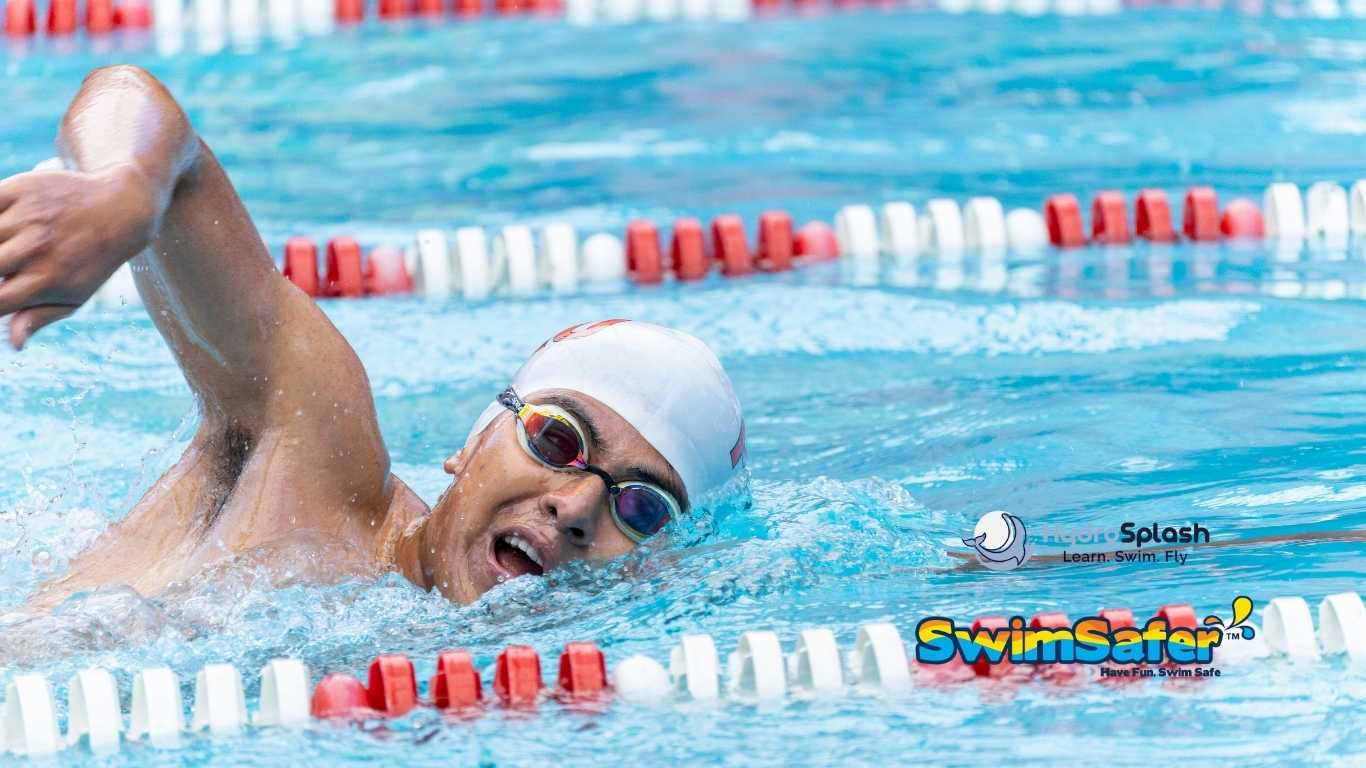
In freestyle, your body rolls from side to side on every stroke, and that roll starts at the hips. The obliques down the sides of your waist drive it, and the deep stomach muscles keep you from bending in the middle while you breathe.
The same arm pull works the chest as well, which our guide to the best swimming stroke for chest muscles explains. The flutter kick works the legs too, which our guide to the best swimming stroke for legs explains. Rotate as one piece, shoulders and hips together, rather than twisting only the arms. Our guide to learning freestyle covers the body roll we teach.
Butterfly: The Hardest Core Workout in the Pool
Butterfly moves the whole body in a wave that starts at the chest and runs through the hips to the feet. Your stomach and lower back muscles drive that wave on every stroke, so it is the most demanding stroke for the core.
It is also the hardest stroke to keep going with good form, and a tired butterfly loads the lower back. We teach it once freestyle and breaststroke are steady. If you are wondering whether it is within reach, our article on whether butterfly stroke is easy to learn is honest about the effort.
Backstroke Trains the Core to Hold You Level
On your back, the hips want to sink, and your core is what keeps them at the surface. Backstroke also rolls from side to side like freestyle, so the obliques and lower back work steadily without any strain on the neck.
That level body line is also why backstroke leads our guide to swimming strokes for scoliosis. Keep your head still and your hips up, and the stroke does the rest. Our page on learning backstroke explains the body position.
Breaststroke Works the Core Least
Breaststroke is the gentlest of the four for the core. Your trunk works to lift you for each breath and to hold a straight line in the glide, but there is no rotation and much of the effort goes to the arms and legs. Hold a long, flat glide between strokes and the core gets more of the work. Our guide to learning breaststroke shows the glide position.
Getting More From the Best Swimming Stroke for Core Strength
Mixing strokes in the same session works the core from different angles: freestyle and backstroke for rotation, butterfly for the wave, and short kick sets on your side or back to make the trunk hold you level without the arms. Sculling on your back with the hips held up is another simple core drill for the end of a session.
Be honest with yourself about abs. Swimming strengthens and tones the stomach muscles, but whether you can see them depends on body fat, which no single stroke can burn from the middle alone. If that is your main goal, our guide to which swimming stroke is best for belly fat looks at it on its own. Many swimmers also add planks or other core work out of the water.
Learning a Stroke That Works Your Core
Most adults who find swimming tiring are bending in the middle: the head lifts, the hips drop and the legs drag. A coach can see that in a few lengths, and fixing the body line is what turns swimming into a real core workout.
Our adult swimming lessons cover all four strokes at ActiveSG public pools or at your own condo pool, and a private swimming lesson lets your coach work on your body position alone. Tell your coach your core is the goal, and the session can be built around freestyle, backstroke and kick sets.
It strengthens and tones the stomach muscles, but visible abs depend on low body fat. Regular swimming helps by using plenty of energy, and what you eat matters as much as the pool.
Many adults find gentle swimming easier on the back than other exercise, because the water carries the body’s weight. If your back hurts, check with a doctor or physiotherapist first and tell your coach before the lesson.
Not hard. Think of holding yourself long, as if standing tall, rather than squeezing. Too much tension makes breathing harder and the stroke stiff, and a relaxed but steady middle works better.
Most adults feel steadier in the water after a few weeks of regular sessions. Short, frequent swims with good form do more than an occasional long one, because a tired body line stops working the core.
Looking for structured guidance as you learn to swim? Speak with our team about a swimming lesson arrangement suited to your current ability and goals.