How to Hold Your Breath Longer in Swimming, Safely
How Can You Hold Your Breath Longer in Swimming?
Many adults feel they run out of air after a few strokes and decide they need bigger lungs. Usually they do not. Learning to hold your breath longer in swimming is mostly about breathing out properly, staying relaxed and finding a rhythm, and it has to be done safely. This guide covers all three, and how trained swimmers practise breath control without taking risks.
To hold your breath longer when swimming, breathe out slowly underwater instead of holding the air in, relax your body so it uses less oxygen, and practise breathing patterns at the surface. Breathe normally before you go under, never take fast, deep breaths to stay under longer, and come up as soon as you feel the urge to breathe.
Why You Run Out of Breath So Quickly
The urge to breathe comes mostly from carbon dioxide building up in your body, not from your oxygen running out. When you hold your breath with a tight chest, that urge arrives quickly and feels urgent. Tension makes it worse, because tight muscles use more energy.
Most beginners also hold the air in and then try to breathe out and in during the short moment their face is clear of the water. There is not enough time for both, so each breath is shallow. Our guide for adults struggling to learn to swim explains why breathing out steadily matters more than holding on.
Breathe Out Underwater, Not In Your Chest
The single biggest change you can make is to let the air out slowly while your face is in the water. Hum, or blow a steady stream of bubbles through your nose and mouth. When you turn or lift to breathe, your lungs are already mostly empty, so the new breath comes in easily.
Practise this standing in the shallow end before you swim. Take a normal breath, put your face in, breathe out for a slow count of five, then lift and breathe in. Our article on whether there is a technique to breathe underwater explains the exhale in more detail.
Relax to Hold Your Breath Longer
A relaxed swimmer uses less oxygen than a tense one, which is the simplest way to hold your breath longer without trying harder. Let your shoulders drop, keep your hands soft and your kick small. Swimming more slowly, with longer strokes, also cuts the effort, so the same breath carries you further.
Your mind plays a part too. If you think about running out of air, you will feel short of it sooner. Some swimmers count their strokes or their bubbles to keep their attention on something calm. Others picture each length as a few easy strokes rather than one long stretch.
Time Each Breath With Your Stroke
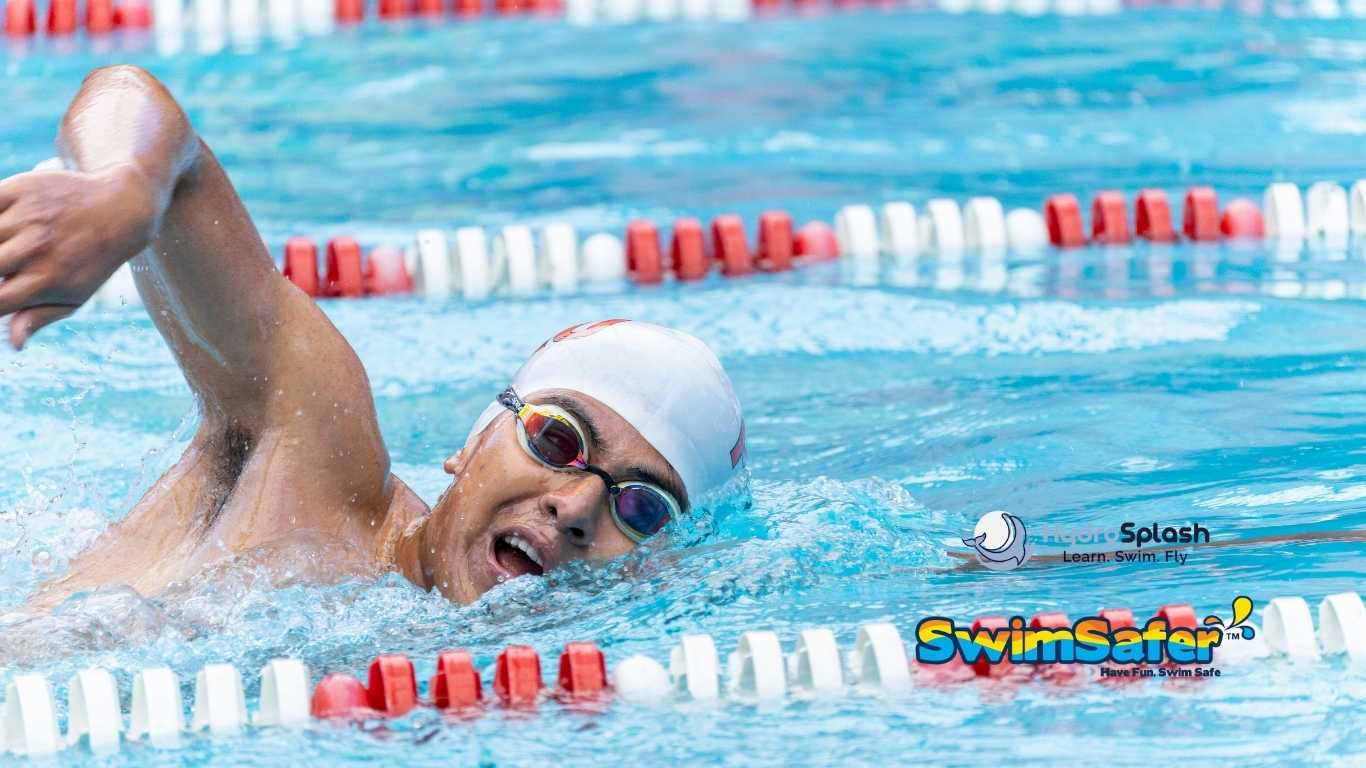
Part of the trick is not needing to hold on at all. In freestyle, turn your head to breathe as one arm pulls back past your hip, so your mouth clears the water in the pocket beside your shoulder. Keep one goggle in the water, breathe in quickly, and return your face as that arm swings forward. A breath taken on time needs no rush, and the next one comes before you feel short.
Breathing Patterns That Help You Hold Your Breath Longer
Breath control in swimming is trained at the surface, in a steady rhythm. In freestyle, start by breathing every two strokes until it feels easy. Then try breathing every three strokes for one length, and go back to every two for the next. Our guide on how to breathe while swimming for maximum efficiency covers the timing of each breath.
Over the weeks, you can extend the pattern for a single length to every four or five strokes, always resting with easy breathing between lengths. Swimmers call this reduced-breath training. It helps you hold your breath longer because it teaches you to stay relaxed and breathe out steadily, not because it makes your lungs bigger. Our swim workout for breathing puts sets like these into a full session.
Practise Breath Control on Dry Land
Slow breathing out of the water helps you notice how you breathe. Sit comfortably, put one hand on your stomach, and breathe in through your nose so your stomach rises before your chest. Then breathe out slowly through your mouth for longer than you breathed in.
A few minutes of this most days makes slow, full breaths feel normal, and that habit carries into the pool. Keep it calm. Dry-land practice is for control and relaxation, so there is no need to hold your breath for as long as you can.
How Trained Swimmers Work on Holding Their Breath
Competitive swimmers do practise holding their breath, but in a controlled way. They swim short reduced-breath sets at the surface, with full rest between them, and they do short underwater kicks off each wall. A coach watches the whole time, and the distances stay short.
Long breath-holds, such as lying still underwater for as long as possible or swimming lengths underwater, belong to freediving. That sport is learned with qualified instructors and safety divers. They are not exercises to copy in a public pool on your own, however often you see them recommended online.
Stay Safe: Never Push a Breath-Hold
The Royal Life Saving Society UK’s guidance on shallow water blackout explains how a swimmer can lose consciousness underwater after fast breathing and a long breath-hold, often with no warning signs. It can happen at any depth, including in a shallow pool.
So breathe normally before you go under, and never take a series of fast, deep breaths to stay down longer. Do not compete with friends to hold your breath or to swim furthest underwater, and come up as soon as you feel the urge to breathe. Never swim alone. At a public pool, such as an ActiveSG swimming complex, swim where the lifeguard can see you.
Learning Breath Control With a Coach
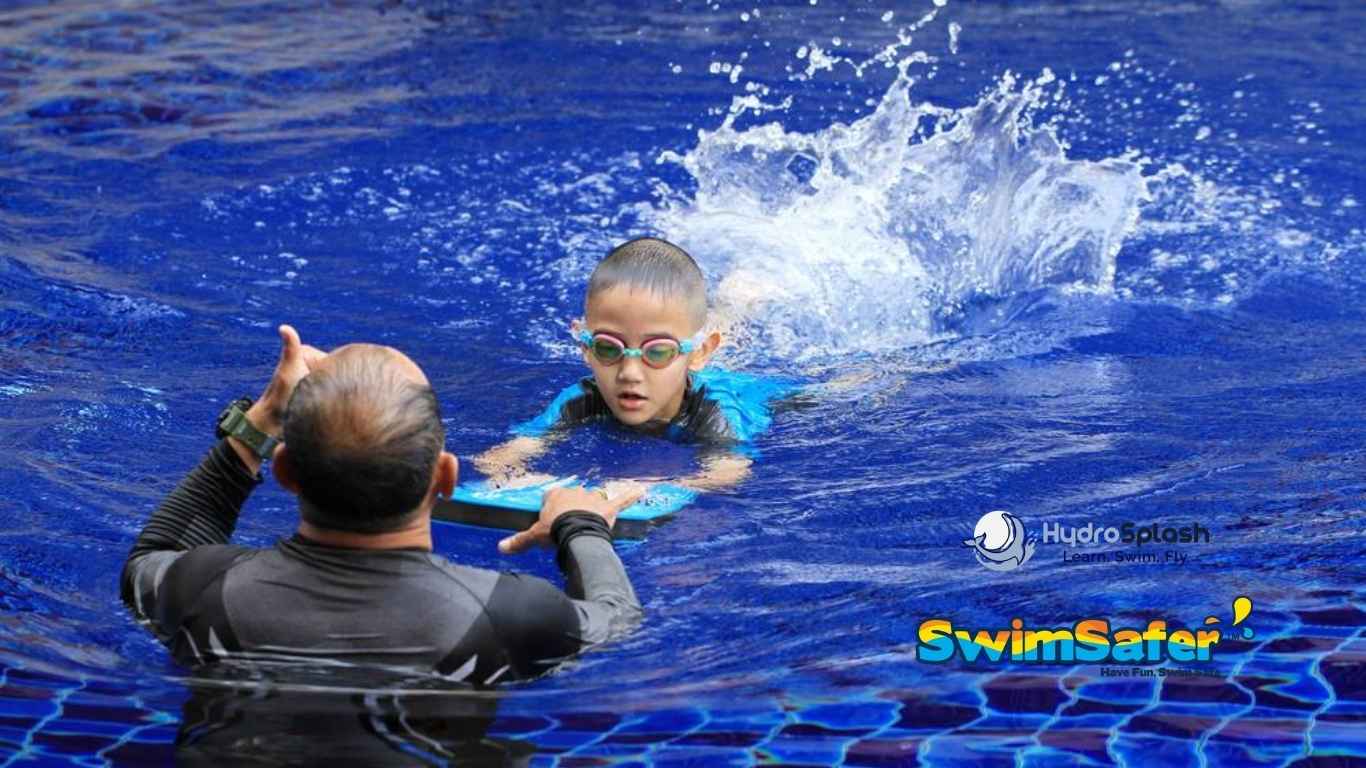
Breathing is often the last part of swimming to feel natural, and it is hard to judge from inside the water. A coach can see whether you are holding your air, lifting your head too high or breathing too late. They can then give you one drill to fix it. Our adult swimming lessons start with breathing for exactly that reason, and a private swimming lesson lets the coach build each session around the part of your breathing that holds you back.
Not long at all. You only need to hold or slowly release a breath for a few strokes before the next one. Comfort and rhythm matter far more than seconds, and there is no target worth chasing.
Usually it is tension and holding the air in, not fitness. Swim more slowly, blow bubbles all the way out underwater, and rest at the wall until your breathing settles before the next length.
It can help a beginner who keeps getting water up the nose, because it lets you relax while you learn the rest. Over time, try swimming without it, so you learn to keep water out by breathing out gently.
Short, relaxed swims underwater with normal breathing beforehand and a lifeguard watching carry little risk. Long holds, holds after fast breathing and underwater distance contests are dangerous, and should not be practised on your own.
Looking for structured guidance as you learn to swim? Speak with our team about a swimming lesson arrangement suited to your current ability and goals.