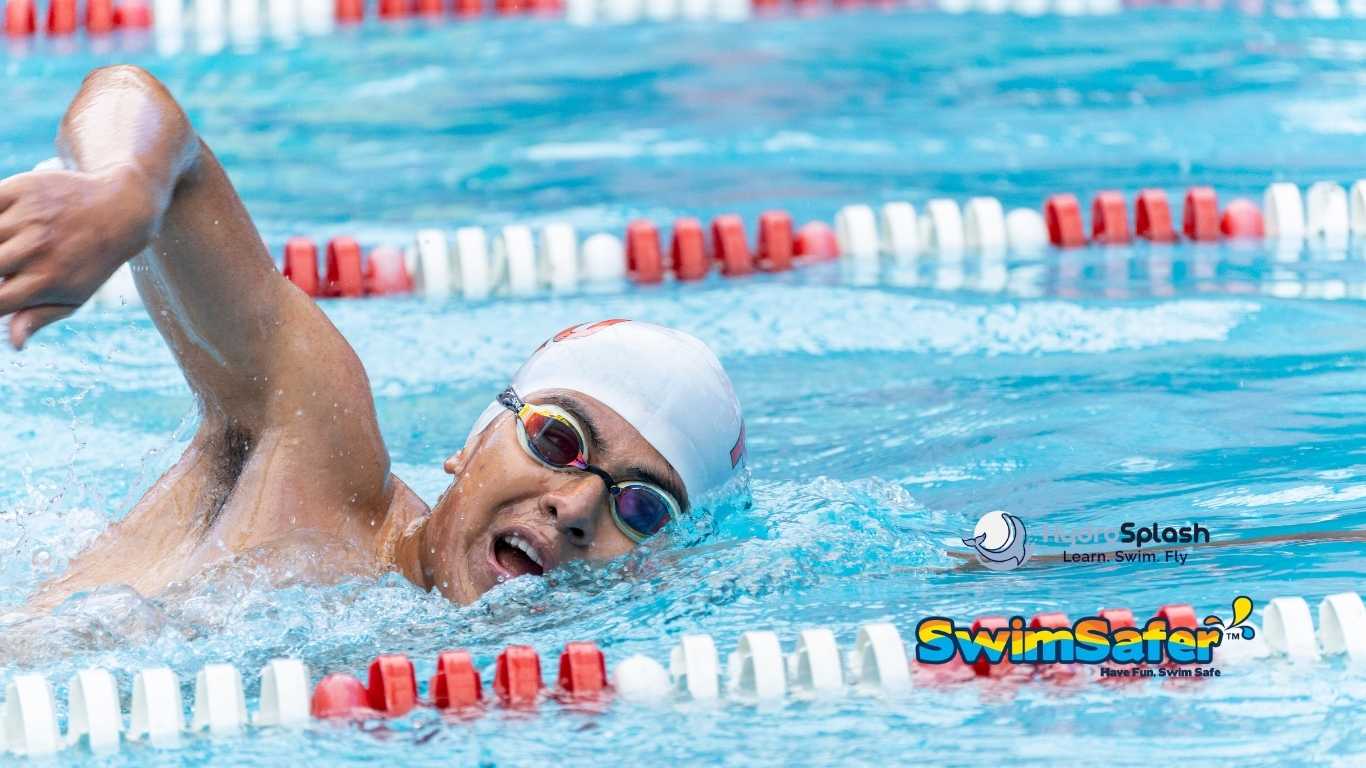
Why Is Coordination Important In Swimming?


How Coordination Helps You Swim More Efficiently
Swimming involves much more than moving your arms and kicking your legs. To swim effectively, your breathing, arm movements, kicks, body position and timing need to work together rather than operating as separate actions.
At HydroSplash Swimming Academy, we often see swimmers who understand individual parts of a stroke but find it difficult to combine them smoothly. Improving coordination can make swimming feel more controlled, reduce unnecessary movements and help swimmers maintain better technique over longer distances.

Concise Answer
Coordination is important in swimming because your arms, legs, breathing, body position and timing must work together to move efficiently through the water. Good swimming coordination helps maintain rhythm, balance and effective propulsion. Poor coordination can interrupt a stroke, increase unnecessary resistance and make swimming feel more tiring even when the swimmer understands the individual movements.
What Is Coordination In Swimming?
Coordination in swimming refers to how effectively different movements are combined into one continuous swimming action.
A swimmer may know how to kick correctly and may also know how to perform the arm movement for freestyle, but those skills alone do not create an efficient stroke. The kick, arm cycle, body rotation and breathing pattern must happen at appropriate moments relative to one another.
This is why learning swimming technique often progresses from individual movements towards combining them.
Coordination also changes between strokes. The timing required for freestyle is different from breaststroke, butterfly or backstroke, so swimmers need to develop the movement pattern that is appropriate for each stroke.
Why Is Coordination Important In Swimming?
Good coordination helps the different parts of your swimming stroke support one another.
When movements are well timed, your arms can generate propulsion while your legs help maintain body position and rhythm. Breathing can occur without unnecessarily interrupting your stroke, and your body can remain in a more stable position through the water.
Poor coordination can have the opposite effect. A swimmer may pause between movements, breathe at an awkward moment, kick against the arm action or lose balance during the stroke.
These interruptions can make swimming less efficient and may cause the swimmer to use more effort than necessary.
Coordination therefore influences not only how a stroke looks, but also how comfortably and consistently it can be maintained.
How Do Your Arms And Legs Coordinate When Swimming?
Arm-and-leg coordination differs according to the stroke being performed.
In freestyle and backstroke, the arms generally alternate while the legs maintain a relatively continuous kicking rhythm. Swimmers therefore need to coordinate these movements without allowing the kick to disrupt body position.
Breaststroke works differently because the arm pull and leg kick have a more distinct timing relationship. Performing both movements at the wrong time can interrupt forward movement.
Butterfly requires another pattern in which both arms move together while the dolphin kick and body movement support the stroke cycle.
Understanding each movement separately is useful, but the eventual goal is to make them function together.

Why Is Breathing Coordination Important?
Breathing is one of the areas where coordination problems become especially noticeable.
Many beginners can perform a reasonable arm movement until they try to breathe. They may then lift their head too far, stop kicking, pause their arms or lose their body position.
Breathing should therefore become part of the stroke rather than an interruption to it.
In freestyle, for example, the breathing movement works together with body rotation and the arm cycle. Learning when to turn, inhale and return the face to the water can help preserve the stroke’s rhythm.
Swimmers struggling specifically with freestyle timing can explore our Freestyle Swimming guide for a closer look at the stroke.
Why Is Coordination Important In Freestyle?
Freestyle depends heavily on rhythm between the alternating arms, flutter kick, body rotation and breathing.
If one element is mistimed, the entire stroke may become less stable.
A swimmer who turns too late to breathe might interrupt the recovering arm. Someone who stops kicking while breathing may lose body position. Excessive arm pauses can also create an uneven stroke rhythm.
Improving freestyle coordination means gradually connecting these elements until the movement becomes more continuous.
For swimmers who already understand the basic technique but struggle to combine the movements, slower technique practice can often be more useful than simply trying to swim faster.
Why Is Coordination Important In Breaststroke?

Breaststroke has a particularly recognisable movement sequence.
The arm action, breathing, leg recovery, kick and glide need to occur in an organised rhythm. When swimmers pull and kick simultaneously without appropriate timing, they may create additional resistance instead of taking advantage of each movement.
Coordination therefore becomes an important part of learning Breaststroke Swimming.
A swimmer may have a strong breaststroke kick and a reasonable arm pull individually but still find the complete stroke difficult if those movements are not timed effectively.
Practising the sequence slowly can help the swimmer understand where each action belongs.
How Does Coordination Work In Butterfly And Backstroke?
Butterfly Swimming requires coordination between the simultaneous arm action, body movement, dolphin kick and breathing pattern. Because several movements happen within each stroke cycle, timing becomes particularly important.
Backstroke Swimming uses alternating arms and continuous kicking, somewhat like freestyle, but the swimmer remains on the back. Coordination is important for maintaining rotation, rhythm and a stable body position while the arms alternate.
Each stroke therefore uses coordination differently.
Learning one stroke does not automatically mean the swimmer will immediately understand the timing of another.
What Happens When Swimming Coordination Is Poor?
Poor coordination can appear in many different ways.
Some swimmers repeatedly stop between stroke movements. Others kick effectively until they breathe, after which their legs temporarily stop. A swimmer may also rush one part of a stroke while delaying another.
These timing problems can create unnecessary resistance and make it harder to maintain momentum.
Poor coordination does not necessarily mean the swimmer lacks strength or fitness. Sometimes the individual movements are already reasonably good, but the swimmer needs more practice combining them.
This is why simply swimming more laps does not always solve a technique problem.
Understanding where the coordination breaks down can make practice more purposeful.
How Can You Improve Coordination In Swimming?
Coordination usually improves through repetition, feedback and breaking complex movements into manageable parts.
A swimmer might practise kicking separately before combining the kick with the arm cycle. Another might slow freestyle down to focus specifically on when breathing occurs relative to the arm movement.
Technique drills such as single-arm swimming or controlled catch-up variations can also help some swimmers isolate timing problems before returning to the complete stroke.
The objective is not to perform drills endlessly. The swimmer eventually needs to transfer the improved timing back into normal swimming.
Practising slowly enough to recognise the movement sequence can be especially useful when learning a new coordination pattern.

Can Swimming Lessons Help Improve Coordination?
Swimming lessons can be useful when you know what a stroke should look like but cannot identify why your own movement feels awkward.
A coach can observe whether the difficulty comes from breathing timing, kicking, arm movement, body position or how those components interact.
At HydroSplash, we can work on the individual part of the stroke before gradually reconnecting it with the complete movement pattern.
Swimmers looking for individual technique feedback can learn more about working with a Swimming Coach In Singapore, while beginners and recreational swimmers can explore our Adult Swimming Lessons.
For broader information about sport and active living locally, you can also refer to Sport Singapore.
Improving Your Swimming Technique With Better Coordination

Coordination develops as individual swimming movements become connected rather than performed independently.
Instead of concentrating only on stronger kicks or faster arms, consider whether your breathing, body position, arm action and leg movement support one another.
When a stroke repeatedly feels tiring or disrupted, slowing down and examining its timing can often reveal more than simply increasing effort.
At HydroSplash, we can help identify where your technique is breaking down and work with you on creating a smoother, more coordinated swimming stroke.
Frequently Asked Questions

What Does Coordination Mean In Swimming?
Coordination in swimming is the ability to combine arm movements, kicking, breathing, body position and timing into an organised stroke. Effective coordination allows these movements to support one another instead of interrupting the swimmer’s rhythm.
Why Is Arm And Leg Coordination Important In Swimming?
Arm and leg coordination helps maintain rhythm, propulsion and body position. When the movements are mistimed, swimmers may create additional resistance, lose momentum or use unnecessary effort even when their individual arm and leg techniques are reasonable.
Which Swimming Stroke Requires The Most Coordination?
Every competitive stroke requires coordination in different ways. Butterfly and breaststroke often involve particularly noticeable timing relationships, while freestyle and backstroke require consistent coordination between alternating arms, kicking, body movement and, where applicable, breathing.
Can Poor Coordination Make Swimming More Tiring?
Yes. Poorly timed movements can increase resistance, interrupt momentum and cause swimmers to use unnecessary effort. Improving coordination can help make a stroke more organised and efficient, although fitness and technique also influence how tiring swimming feels.
Looking for structured guidance as you learn to swim? Speak with our team about a swimming lesson arrangement suited to your current ability and goals.
Home
About HydroSplash Swimming
Adult Swimming Lesson
Private Swimming Lesson
Kids Swimming Lesson
Seniors Swimming Lesson
Advance Swimming Lessons
Whatsapp Us